antimemetics, hyperobjects, memory limits
no, this is not your first day.
I walked into a bookstore sometime in May, and the first thing that caught my eye was There Is No Antimemetics Division by qntm, nominated for the Arthur C. Clarke Award and listed as a sci-fi bestseller. When I was younger, I was really into SCP—I remember drafting an article at the beginning of COVID, being ready to upload it into the sandbox, and getting terrified that they would realize I was underage and permanently ban me—and seeing qntm’s name on the shelf brought back some good memories. I remember reading CASE COLORLESS GREEN on the car ride back home from a Cantonese restaurant in Markham on my cracked iPhone 6, then going through all of the comments and anything else I could find about the series. The things I read or watched or played on those kinds of car rides make up a good chunk of what I love to this day.
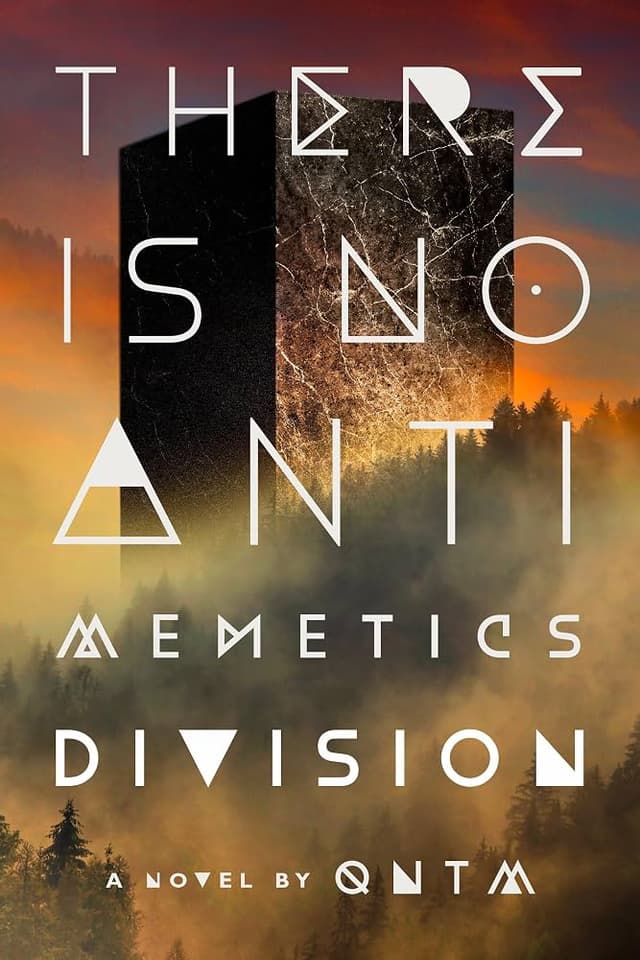
An antimemetic, as described by qntm, is an idea with self-censoring properties; an idea which, by its intrinsic nature, discourages or prevents people from spreading it. How do you deal with something that you cannot remember exists? This base Lovecraftian concept is more than enough to serve as the basis for the entire book, which is largely adapted from the articles I read in the car years ago (with all references to SCP and Creative Commons material scrubbed out, of course). I was engrossed with the idea when I was younger, alongside their parent concept of a cognitohazard, which refers to an entity or object that is dangerous to perceive. I still love the visceral description of SCP-3125, the main villain of the story:
SCP-3125 is adapted for survival in an ideatic ecology considerably more violent and hostile than our own. (Here, "our own" refers to human head space: the set of all ideas which humans have or are biologically capable of having.) Because humans have no natural exposure to ideas as aggressive as SCP-3125, human minds have no protective evolutionary adaptations against it.
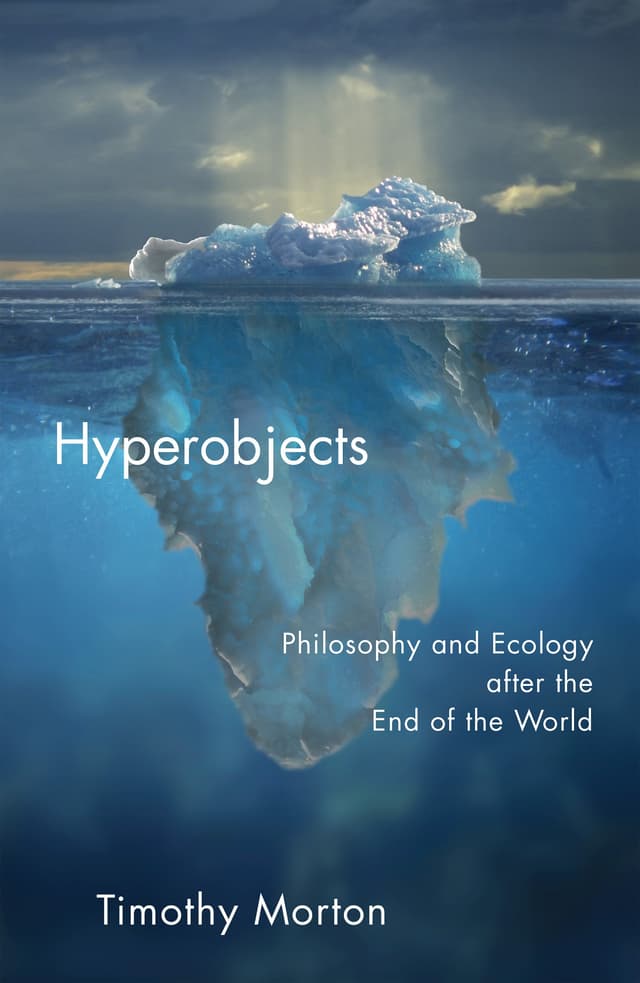
Parallel to this concept of a living idea (and a bit more academically rigorous) is Timothy Morton’s hyperobject, which also comes to mind quite often. Originally applied through an ecological lens, hyperobjects are entities that span time and space so widely that it’s impossible to perceive them in their entirety. Climate change is the poster child of hyperobjects, along with AI, imperialism, and so on and so forth. I remember a distinct lesson from high school physics. On some October day right before lunch, we were watching our teacher throw a ball up and down in the air, and he asked simply, can you see the exact moment when the ball reaches its apex, when it goes from moving upwards to moving downwards? The human eye is designed exceptionally well to perceive velocity and position, but we are terrible at understanding acceleration. We may understand the shape of a complex idea, understand how it’s changing and even estimate what it will look like in the future; but the nature of its change, the how soon and the where and why, is both the most important and the most difficult to grasp.
Am I doing a disservice to the people and communities tackling these problems by comparing them to science-fiction monsters that make slugs wriggle out of your eyes? Kind of. Morton has previously described his work with hyperobjects as offering people a dose of disquietude in hopes of inoculating them against the growing weirdness and terror of being alive, while startling them awake to the unprecedented geotrauma taking place around them. I will be prescriptive and say that this attitude does not meaningfully apply to my generation. Artaud’s Theatre of Cruelty, through which Morton’s line of thinking descends, works because a sudden, violent paradigm shift sparks a strong emotional reaction from the audience. But what if you are born after this awakening? What if there’s no novelty in examining these superstructures that subsume our lives because we are already acclimated to it? The most difficult thing to describe is what is most fundamental to you because words cannot convey the depths of your intuition and understanding. In this sense, hyperobjects present self-censoring properties by virtue of our proximity to them.
“Theater of Cruelty means a theater difficult and cruel for myself first of all. And, on the level of performance, it is not the cruelty we can exercise upon each other by hacking at each other’s bodies, carving up our personal anatomies, or, like Assyrian emperors, sending parcels of human ears, noses, or neatly detached nostrils through the mail, but the much more terrible and necessary cruelty which things can exercise against us. We are not free. And the sky can still fall on our heads. And the theater has been created to teach us that first of all.”
My favourite question I ask all of my friends is the following: in your next life, would you want to be dumb if you had a guarantee of being happy? When we were younger, I’d say that the answers were split about 50/50. Nowadays, I’d say that 80% of them believe they would take that deal, and the other 20% offer a much more hesitant yes. I’m privileged to have grown up in an environment where almost everyone in my life was raised with the understanding that knowledge is a weapon—something you polish and sharpen, something you use to establish your position in the world, more often than not through competition. But I think one of the first lessons early adulthood slaps you with is how often life renders your knowledge useless and forces you to rely on little else but faith. Faith that old age will treat your loved ones kindly, faith that someone extends a helping hand when you need it most, faith that there exists a future for you to exist in. And when you are forced to make a suboptimal choice, dragging your life away from the path you might have originally envisioned, would it have been better to be ignorant that there were other options available? What’s the point of having a correct mental model of the world if it doesn’t make your life better?
When you hold a weapon, it is difficult to believe that you are not at war. Everybody has their own unique suite of negative thoughts they overlook to preserve their own sanity. There is, in its own way, a slight nobility in this process of surrender, in redirecting your attention to something that you (hopefully) believe holds greater importance. But the true horror lies in the slow process where the distinction between accepting peaceful ignorance and forgetting that you are even entrenched in a conflict in the first place fades away. The scariness of SCP-3125 ends at the fact that, if the protagonists of our story don’t succeed, life on Earth as we know it ends. On the other hand, harmful hyperobjects will intertwine themselves into every aspect of our lives such that there will be nothing to be ignorant of because there is nothing to be aware of in the first place. It’s simply just how things are, how they always were, and how they will always be.
Morton wrote his seminal work on hyperobjects in 2013, and qntm wrote his first works relating to antimemetics in 2008, but the bulk of what would eventually become There Is No Antimemetics Division was written in 2015. I feel like they both had a glimpse of the world we live in today, where our cognition is the primary resource we must manage and defend. Without memory, we are atemporal—we cannot look to the past for inspiration or the future for hope, only perceiving the present as it applies itself to us—and as such, we are unable to change. One of my other favourite things to discuss is what people a hundred years from now will look back on with horror when studying our lives in textbooks. My go-to gimmes will be the fact that we ate real animals instead of lab-grown meat (I say this as a non-vegetarian or vegan), and that toilet paper will be seen as barbaric. But how would they feel about how we handled the climate crisis? The emergence of AI? Would they give any of us grace for failing to recognize how deeply our choices will have affected their lives, and chalk it up to ignorance, or would they condemn us for getting halfway there and giving up? I’d hope that this would be one area where they’d be a little kinder.